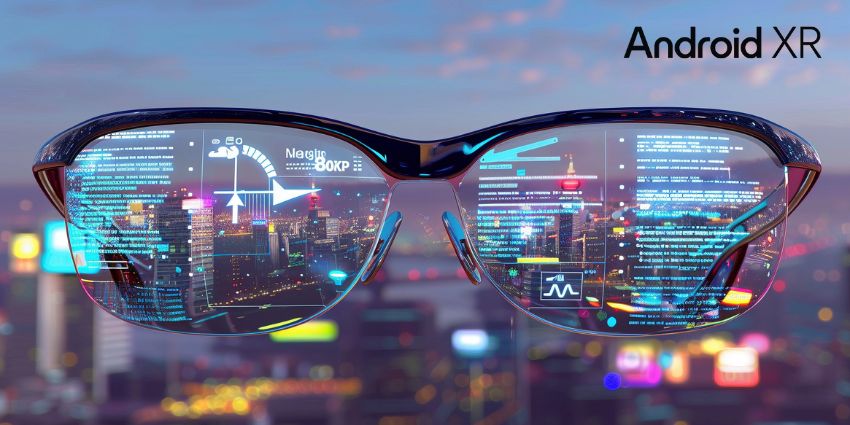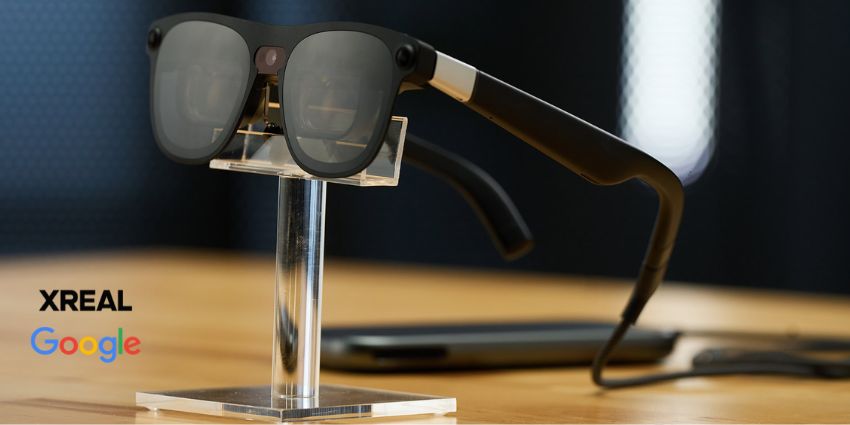

Google and XREAL have showcased a first-look clip of Project Aura, their new partnered AR smart glasses. At first glance, Aura looks like a pair of fairly normal sunglasses. That’s the magic trick. Beneath the tinted lenses sits a surprisingly dense package of technology: Sony micro-OLED displays, open-ear spatial audio, onboard microphones, and a Snapdragon chipset running Google’s revamped Android XR platform. It’s lightweight at around 80 grams—heavy for sunglasses, light for AR—and carries the promise of being something people might actually wear rather than tolerate.
Google first teased the concept at I/O earlier this year, but yesterday the company pulled back more of the curtain in at The Android Show: XR Edition. It turns out Aura isn’t meant to be a one-off gadget; it’s a reference design meant to showcase what Android XR can do as Google prepares to open the platform to more hardware partners.
A New Category for Android XR
Compared to XREAL’s current lineup of display-glasses, Aura is in a different league. Instead of acting as a virtual monitor tethered to your phone, Aura relies on a compute puck powered by Qualcomm’s Snapdragon XR2+ Gen 2, the same chipset inside Samsung’s Galaxy XR headset. This little puck runs the full Android XR OS, giving Aura access to most Galaxy XR apps out of the box (minus things requiring face tracking, which Aura lacks).
The hardware leap doesn’t stop there. XREAL confirmed Aura will offer:
- A 70-degree diagonal field of view, its widest yet
- Built-in head and hand tracking, elevating the experience beyond simple 2D screens in space
This pushes Aura closer to lightweight mixed-reality territory while avoiding the bulk and battery strain of full headsets.
But let’s keep expectations real: this isn’t Meta or Apple’s futuristic waveguide AR. Those devices sit millimeters from the eye and aim to blend into your daily prescription eyewear. Aura sits further out, blocks a good amount of light, and lands squarely in the “XR viewing device” category—more immersive than smartglasses, far sleeker than a headset.
Think of Aura as a refined, lightweight alternative to Samsung Galaxy XR, trading extreme immersion for portability and everyday wearability.
A Still-Developing Story Behind the Scenes
Google quietly confirmed Aura is still locked onto a 2026 release window—just days after leaked internal memos revealed Meta pushed its own puck-powered device to 2027. The timing is… convenient.
It comes only a month after French XR startup Lynx revealed Google had terminated its Android XR partnership. Google declined to comment on the matter but did reconfirm its ongoing work with Sony. So far, though, Sony hasn’t shown anything resembling a consumer-ready Android XR device, and its current SRH-S1 runs a forked version of Android, not Google’s.
Aura may end up being Google’s flagship proof-point that the platform is alive, coherent, and attracting hardware partners.
What ‘Project Aura’ Means for the XR Ecosystem
If you zoom out for a moment, the story here isn’t just a new gadget. It’s Google attempting to reboot XR on its own terms—this time with a polished OS, hardware partners, and a clear product strategy. Project Aura is the first taste of what that ecosystem could look like when glasses, pucks, and headsets all run the same platform.
Battery life remains the biggest question mark. XREAL’s existing glasses only last a few hours when tethered to a phone, and Aura bumps processing to an external puck. It’s unclear how long the setup will run unplugged—but Google’s early framing makes it sound like the company wants Aura to be something people use out in the world, not just at a desk.
If that’s true, Aura could finally give consumers and enterprises a wearable XR device that feels modern, useful, and—crucially—practical.
What to Expect for Android XR
Spatial computing is clearly splitting into two tracks: high-immersion headsets and stylish, lightweight wearables. Project Aura sits right at that intersection—a bridge between where XR has been and where Google hopes it’s going. If Aura delivers, it could become the device that helps normalise everyday mixed-reality experiences long before true AR glasses hit the mainstream.
The next two years of Android XR are going to be fascinating, and the 2026 release of Project Aura is certainly one to look out for…