
In the Covid era, when we all developed opinions about sourdough, and celebrity montages tried to heal the planet with a John Lennon cover, the metaverse was pitched as the next great digital migration. It was supposed to be a shiny new land of virtual worlds where we’d hang out, shop, meet, build, socialise, and eventually evolve into futuristic beings who no longer needed good posture.
Then, reality kicked in, and people began to ask awkward questions like, “So… who’s actually using this?”
Now, as 2025 draws to an end, the story has shifted again. Augmented reality wearables are stealing the Metaverse’s limelight, as both consumers and enterprises favor tech that fits into their everyday lives.
The $70B Question
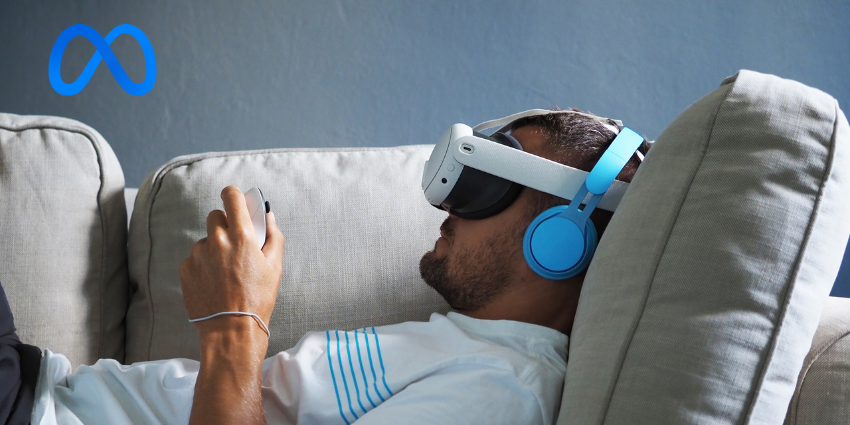
Meta didn’t just lean into the Metaverse. It renamed the company after it in 2021 and poured money into Reality Labs, its XR division, like a gambler convinced the next spin is ‘the one’. While their Meta Quest headsets have piqued the interest of both enterprises and consumers alike, with Meta capturing 70% of the VR/AR market share in 2024, they’ve failed to reach the mass adoption that Zuckerberg was hoping for.
The numbers have been brutal. Reality Labs reported a $4.4 billion operating loss in Q3 2025 and has accumulated around $70 billion in cumulative losses since late 2020. At that level of spending, people start asking, “Will this pay off?”
Meta Connect’s Reality Check
At Meta Connect 2025, the company’s new strategy was clear. Zuckerberg is still envisioning a world where XR replaces the smartphone, but the practical path to get there is increasingly about AI-enabled smart glasses (a vision shared by Samsung and Apple) rather than clunky headsets.
The latest Ray-Ban collaboration, a fresh Oakley partnership, and Meta’s neural wristband work all point to Zuckerberg’s bigger aim: hands-free AR wearables that are genuinely practical – and, crucially, cool enough that people actually want to wear them.
Meta also just acquired AI-wearables startup Limitless, showing just how confident they are in the technology’s potential.
Limitless, co-founder and CEO Dan Siroker:
“Meta recently announced a new vision to bring personal superintelligence to everyone, and a key part of that vision is building incredible AI-enabled wearables. We share this vision, and we’ll be joining Meta to help bring our shared vision to life.”
While it’s essential to note that Reality Labs is responsible for both the Metaverse project and its AR technologies, this budget cut suggests a clear restructuring focused on wearable tech.
Building Everyday Tech
The metaverse pitch was always grand. Too grand, maybe. It asked everyone to go somewhere else – into virtual spaces, virtual identities, virtual everything – then tried to sell that as “frictionless.”
AR does the opposite. It integrates seamlessly into people’s everyday workflows, providing easy access to what they need without interfering with in-person interactions. That difference matters because humans, in general, are not a species that loves switching contexts. We barely tolerate changing tabs….
The original metaverse dream was architectural: to build worlds, economies, identity systems, and social gravity. AR is more like interior design. It enhances what’s already here, adds information, and offers context.
Escapism to Utility
The metaverse asked people to relocate their lives into virtual worlds, and most didn’t. AR wearables flip the model: instead of replacing reality, they enhance it, weaving AI-powered assistance into existing habits and workflows. Meta’s pivot signals the same lesson the market keeps teaching: the future of spatial computing won’t be won by building a new destination, but by improving the one we already live in.